The land Stow Acres sits on was a Black-owned golf course in 1926. Robert H. Hawkins built nine holes here and called it Mapledale. That September it hosted the National Black Men's Championship, one of the first organized tournaments for Black golfers in the country. The course you book today carries that history. Most golfers who play it have no idea.
Stow Acres is two championship 18-hole courses on 350 acres in Stow, about 25 miles west of Boston. The North and the South. Geoffrey Cornish designed both. They share a clubhouse, a parking lot, and a name. On the tee sheet they behave like two different clubs.
North vs. South: they are not interchangeable
This is the one thing to get right before you book. The North is the harder course and the better course. It plays 6,939 yards to a par of 72, rating 72.8, slope 130. The South is 6,520 yards, par 72, rating 71.8, slope 120. That slope gap of 10 is real. The North asks more off the tee and around the greens.
North Course
- 6,939 yards, par 72
- Rating 72.8 / slope 130
- Opened 1965
- Hosted U.S. Amateur Public Links (1995)
- The one better players want
South Course
- 6,520 yards, par 72
- Rating 71.8 / slope 120
- Wider, more forgiving
- Better for higher handicaps
- Often easier to get a tee time
The North hosted the U.S. Amateur Public Links in 1995. That was only the second time the championship came to New England. Golf Digest has listed it among the best public courses in America. If you are a single-digit player driving out from Boston, the North is the reason to make the trip. The South is the one to book when you want a relaxed round or you are bringing someone who is still finding the fairway.
What it actually plays like
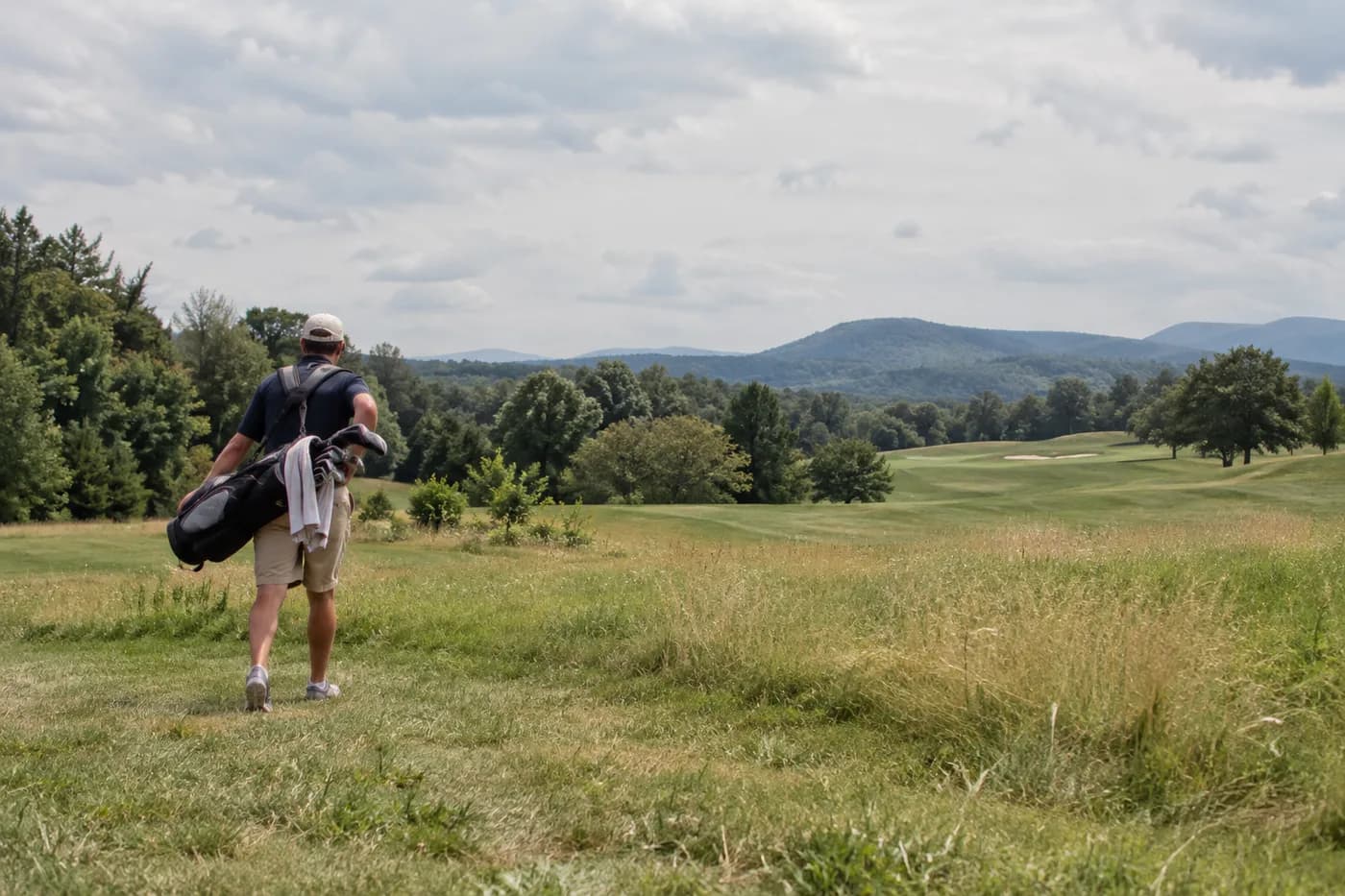
Classic New England parkland. Tree-lined corridors, rolling terrain, and greens that have been here for decades. The North's routing is tighter and the green complexes punish a long-side miss. The South gives you room and lets you swing.
Be honest about conditions. Recent reviews are mixed. Players in 2026 have called out bare spots and crabgrass on North fairways and patchy turf that needs work. The greens get better marks and roll at a fair pace. This is not a manicured private club. It is a high-volume public course doing a lot of rounds, and the turf shows it by late summer. At the price, that is a fair trade for most golfers. Just know what you are getting.
What it costs and how to book
Green fees run roughly $75 to $89 for 18 holes depending on the course, the day, and the time. Twilight and weekday rates come down from there. Each course runs its own foreTee booking page, and both also list inventory on GolfNow and TeeOff. You can call the pro shop at (978) 568-1100.
Here is the catch. The North and the South are booked as separate facilities. Two foreTee pages, two GolfNow listings, two TeeOff listings. If you only check one, you miss half the tee sheet. On a busy Saturday the North can be full while the South still has 8am slots open, or the reverse. There is no single screen that shows you both courses side by side with what is actually available right now.
Is it worth the drive from Boston?
For the North, yes, if you want a real championship test and you are willing to accept summer turf wear. It is about 40 minutes from the city. If you are chasing pure conditioning at a similar price, Shaker Hills in Harvard and Red Tail in Devens are nearby and both come up in the same conversation. Stow wins on history and on having two full courses in one stop. For where it ranks against the rest of the region, see the best public courses breakdown.
Stow Acres is really two tee sheets wearing one name, spread across foreTee, GolfNow, and TeeOff, and the course you want is often the one that is already booked. Text Carl which course you want and when. He checks both the North and the South across every system and calls the pro shop directly, so you book the right course instead of guessing which page to refresh.